Music Psychologists – Where Are You?

Writer Mirab Kay / Photographer 

How much does music affect you in everyday life? Whether the answer is “a lot” or “a bit”, if you’re reading this you’ll probably agree that music is a vital part of our lives even when we don’t notice it. But how many of you know why this is? 

The science behind music isn’t shared with us when tackling mental health in school, the workplace or in aiding productivity. It holds nowhere near the therapeutic reputation of meditation or mindfulness. Yet, music is one of the most powerful emotive forces on the planet. 

I’d like us to take a musical journey back to primary school. I have no doubt that we all remember playing with glockenspiels and tambourines, being encouraged to dance and sing. There is no dispute that music played a role in our early years especially in shaping our general music taste but does anyone remember doing music as a subject? 

The government can say all they like in their National Plan for Music Education which was published 10 years ago, and maybe music is being explored more than it was before then. But, as a subject, proper musical education is still widely unavailable to us at our most moldable ages. 

The government’s plan sets out that musical training shall be more available to all children which is absolutely great news… Until you realise there’s a fee. 

Speaking from a working-class, ethnic minority background, music lessons just weren’t an option. Yes, we had the opportunity to learn violin, recorder and even ocarina, but dropout rates increased dramatically when a fee was introduced, as they did up and down the country. 

This does not sound like inclusivity to me. 

Not only are primary school children missing out on the opportunity to delve deep into music theory, but they are also not reaping the benefits of music in general like increased concentration and creativity. 

The government will set out a new plan this year that they claim will “shape the future of music education”. However, I think the 10 year wait alone emphasises an overall disinterest from our government, beautifully summarised in Rishi Sunak’s famous statement about musicians (and other artists says they “should re-train and find other jobs”. 

As if music wasn’t one of the only things holding us together during the pandemic.

There is a wealth of information on the side of researchers, although This Is Your Brain On Music author Daniel Levitin admits: “music experts and scientists could do a better job of making their work accessible”.

The next stop on our journey is secondary school. Music is now a subject, instrument learning is up, and new faces contribute to our music tastes. If you’re as passionate about music as I am, I won’t need to tell you that our listening habits influenced our friend groups and even the way we dressed at this very sociable age. 

Again,​​ this goes without saying. What doesn’t go without saying is why music influences our social lives. 

This WIRED article holds some of the answers, but information like this isn’t shared with us at school and let’s face it, none of us had the motivation to go and find it for ourselves. One point the article introduces is that we make assumptions about music taste based on how a person dresses or behaves. 

Stereotyping, assumption-making, selectively avoiding – I am a metalhead who wears pastel colours and enjoys playing classical music: think of how many people missed out on making my acquaintance because of their assumptions. How much easier would it have been to make new friends if we had known to ask about their music tastes?

During secondary school people are also beginning to decide on potential career paths and I bet no one was encouraged to be a musician or music psychologist by their ‘careers’ advisor.

In fact, I bet barely anyone even thought of music as a safe career option. Science was safe, English was safe, Maths was safe. Who says music can’t be a part of any of these subjects, is music dangerous? As Levitin aptly quotes Robert Sapolsky at the beginning of his book, “So many…feel that choosing science means you cannot also choose compassion, or the arts”. 

The option to continue music to college or degree level is not represented nearly enough, simply because it is generally thought that taking music means you have to be a musician. But, even this was a safer option than applying for one of the only Music Psychology courses I could find. 

At BIMM, I quickly grew tired of the overall lack of interest in the psychology and science behind the music I was making (on the part of the students as well as the tutors). I produced pieces and layered the bass because we know that these low frequencies form tangible and satisfying connections with the music. But WHY? 

No one could tell me. I lost interest in asking. The subject is so obscure because not enough people care and these conversations aren’t taking place. So I’m begging, the curious few that do care, show yourselves. We’re in the midst of a mental health crisis and we need all the support we can get. 

Elden Ring’s Roderika: Gaming’s Best Brummie

Writer Billy Beale 

When I first met the armourer Yoana in The Witcher 3: Wild Hunt, I was shocked. This was the first midlands/brummie accent I’d come across in any video game and I was impressed enough that it stuck in my mind.

The same game’s Bloody Baron storyline prominently features another midlands accent, though neither of these are particularly accurate examples. They’re a kind of ‘stage brummie’ accent like you might hear from a supporting character at the RSC or as a punchline in a sketch show, and not really what you’d hear on the streets of Brum.

Examples of brummies in video games are few and far between. Credit should be given to Assassin’s Creed Valhalla, which centres a chunk of story around Tamworth and the kingdom of Mercia. From what I can tell, there’s at least some local dialect representation there but it’s a game I haven’t played because it’s not weird enough.

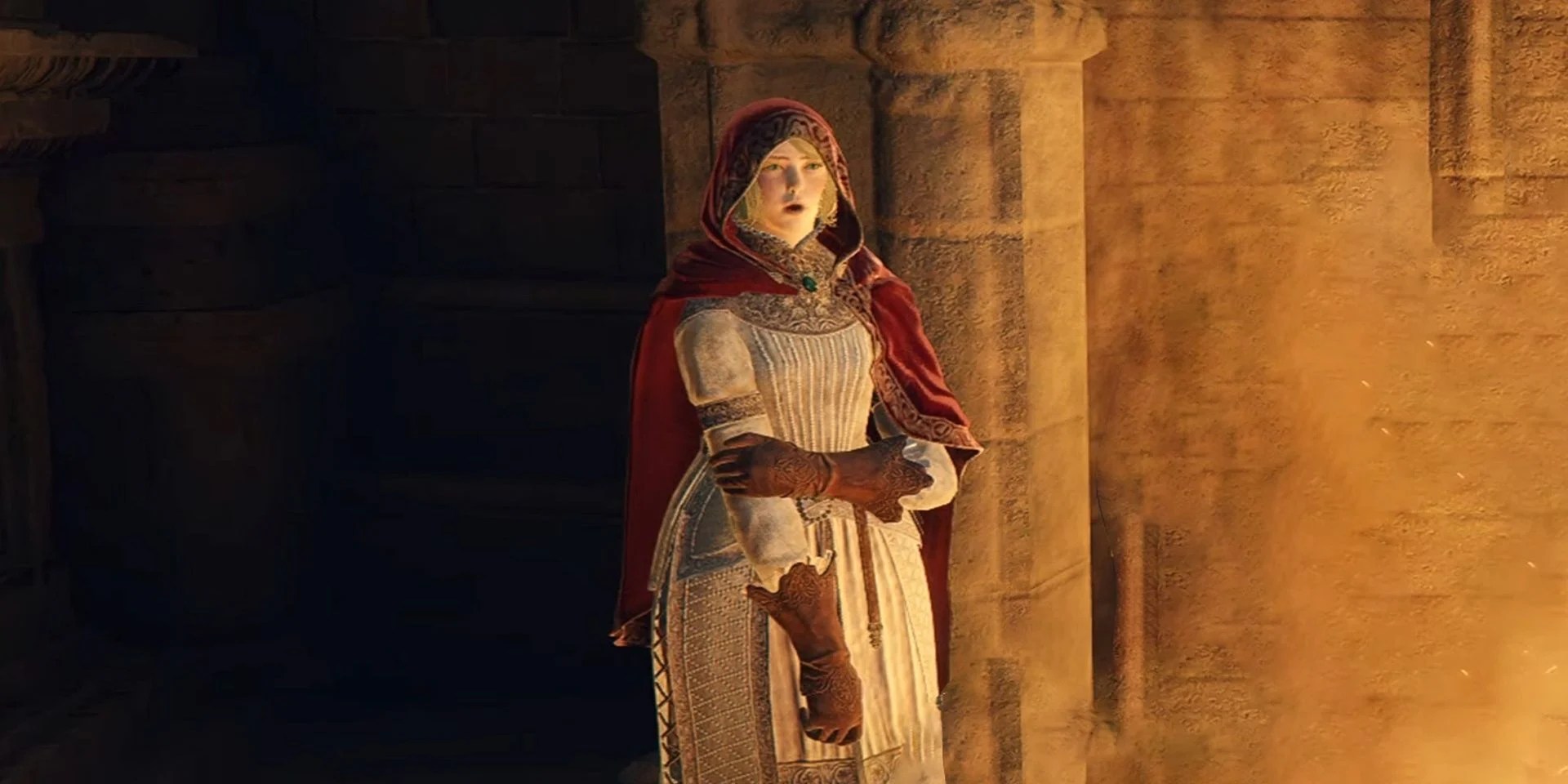
A game I have been playing – obsessively, unstopping, like I might not be able to breathe if I do anything else – is Elden Ring. Imagine my shock when only a few hours in, I come across the character Roderika played by Birmingham’s very own Helen Monks, known for her roles in Raised by Wolves and Upstart Crow.

This article from Inverse highlights some of the ways Elden Ring demonstrates an acute awareness of the British-Celtic mythology it derives so much from, much like Birmingham’s own JRR Tolkien did when he essentially invented the modern fantasy genre.

There is a lot of Tolkien in Elden Ring. Clearly, the developers at FromSoftware have done their homework when it comes to using the full spectrum of British voices to enhance the richness of their worlds and characters. They even included the wall of faces from Brum’s Snobs nightclub.

All the characters from the Raya Lucaria part of the world are magic users and speak with Welsh accents. Another character from the game’s Capital City, The Loathsome Dung Eater, speaks with that sort of ‘stage brummie’, but the less said about him the better.

Roderika develops into a confident and incredibly helpful character, strengthening your spectral allies that aid you in boss fights. I like her a lot for that reason, but most of all I just like hearing such a familiar voice in one of my favourite games.

Elden Ring – Official gamelpay reveal

For more on Elden Ring visit www.eldenring.com

Exile on Trinity Street At The Night Owl on 15 May

Writer Richard Bari / Photographer Sian Dixon

12 May 1972, Exile on Main Street hits the shelves. Critically panned and widely misunderstood, the decadent yet unassuming double-LP settles into the charts and awaits its turn to shine.

As Keef himself said, “if it’s good, they’ll get it sometime down the road.”

Sooner than later, the album and the fateful conditions in which it was forged amasses a reputation that precedes its material. Yet for those with their ears down to the ground, the tunes don’t go amiss. The Stones’ magnum opus chisels its mark into rock and roll history and assumes its rugged throne.

50 years and exactly three days later, musicians across three generations get together for a show that basks in unpolished realism much resemblant of the album they’re honouring.

Exile on Trinity Street, a project spearheaded by Adam Heath of High Horses, brings the greatest rock and roll album straight to Digbeth’s The Night Owl.

The band opens with ‘Rocks Off’ just as Exile does, and despite a loose start they soon get in pace. Richard Bloomer-Davies doesn’t have it easy, being the sole lead guitarist on tracks that are known for weaving multiple guitar parts. Yet, the gaps are effectively filled with mandolins and acoustics, adding a new twist to the songs.

With a cast of nine members, the frontliners swap between leading vocal parts, and supporting guitars. Becky Walker on sax and the rest of the rhythm section stay put, except for Adam who emerges from the drum kit throughout the show.

As the band warms up, moments of greatness start appearing. There’s Mark Butler’s take on ‘Torn and Frayed’, a sax solo ripping through an equally great ‘Sweet Virginia’, and a beautiful guitar tone on ‘All Down the Line’.

With 17 songs divided over three sets, Exile On Trinity Street covers a heavy part of the album. But the closing act steals the show with Adam fronting for a few tunes.

Jumping and swaying like a mad jester with a mandolin in hand, he growls through ‘Stop Breaking Down’ with the same intensity as the High Horses street performances.

Post-show, I catch up with Adam, Richard, and mandolin player Loz.

“The whole thing was originally pulled together,” says Adam, “because Maz (Mazzy Snape) put me and a few people who loved the album in a group chat – people I’ve never met before. We started talking, then put the call out and others got involved.

“The intention was to get a backing band together with all different singers but loads of us could sing, so we thought we’d just do the whole thing ourselves.

“One of the hardest things about it,” Adam adds, “is probably the same reason why the Stones didn’t play loads of these songs live, because it’s a studio album. The vocals overlap, there’s loads of overdubs, lots of stuff going on.”

Loz confirms: “Even if you’ve loved it like I have, ever since it came out and you think you know the album well, once you start playing the songs, and you listen properly, you realise they’re not as simple as you think – they’ve strange arrangements, drop beats…

“Having said that, we decided at the very beginning, that we’re not involved in reproducing stuff – we’re involved in celebrating the album, putting our own twist on it.”

“There isn’t a mandolin on Exile,” adds Richard, “but I tell you what… you’ve just seen it and it sounds awesome.

“The whole thing was serendipity anyway – I got involved because I repaired Ad’s mandolin and when he came to pick it up, he asked, ‘Do you wanna do a show? Come do three songs.’

“Then we did the whole thing, cause it’s so rare to get a bunch of strangers in one room who work so well together… The Stones themselves had loads of people around at the time, in the same way this came together very organically.”

For more from The Night Owl go to: www.thenightowl.club

The Unique Experience At Hockley Social Club On 13 May

Writer Jasmine Khan / Photographer Hassan Ul-Haq

My hand is stamped with an adorable martini illustration and I’m struggling to find a seat at The Unique Experience. Hockley Social Club’s got a nice buzz going on a friday night. The radiant Call Me Unique, complete with custom outfit by Ella Judy, is already gracing the stage accompanied by her usual upbeat energy.

The night is set to be a spin on Unique’s typical showcase of local soul, r&b and hip-hop talent. With Missy versus Busta as the theme, I can’t wait to get stuck into the music. Unique’s soulful vocal’s lead on the first of many classic hip-hop bangers with NeONE The Wonderer’s mystical, crisp flow matching her talent each step of the way. His pauses and clever lyrics leave us hanging off every line.

The band grooves, with Arthur Stanley (guitar), Reed Bass (bass), Joiisol (keys) and Oliver Tabor (drums) rocking steadily in the background. Hockley Social Club is cool, lit in ice blue and lavender. The stage is low so we’re right in the action and I can’t help but nod my head.

There’s something about that Unique-NeONE combination that just catches you and carries you away into the night.

The first of many talented rappers to spit over the legendary Missy Elliot (sung by the almost equally legendary Unique) is Jordvn Emanuel. His flow is collected, clear and to the point while he confidently paces across the stage gesturing at the audience and then back at Unique, switching verses occasionally with NeONE.

There’s such a creative ease to the musical interaction with all of the artists smiling as the group’s confidence and numbers grow.

Jugganaut’s presence immediately commands the growing audience’s attention. His powerful MCing and dancehall vibes hype up the energy at Hockley Social once again and B-boys start break-dancing in the space between the audience and the stage. A space I predict will get smaller and smaller from here on out.

Jugganaut is joined by Har-Q, who catches my eye immediately. He’s donning a phantom-of-the-opera-esc mask and spits wise lyrics barely pausing for breath, flowing over the slick beat maintained by the band. There’s hints of childish gambino but Har-Q clearly has an individual style.

We also hear from Sam Dutch (Sayob) whose r&b falsetto vocals are to die for. Ruth Kokumo makes a brief cameo blowing us away with her deep bluesy growls which she layers masterfully alongside the now seven rappers on stage.

In the break, DJ Alastair Squirre L Marriot keeps the rhythm going, and the second half kicks off strong with some Busta Rhymes covers.

Napps, Dolo and $ilky are all brave enough to answer Unqiue’s call for any musicians in the house to join the jam. They bring a mad amount of Friday night energy with them, though one artist who steps up truly steals the show: Keilah Rebekah.

Keilah’s vocals begin like the soft brush of a feather, delicate and beautiful. As she gains confidence and momentum they soar, Keilah’s soulful, dynamic voice completing intricate runs with ease. The final moments of Keilah and Unique’s duet sees them perfectly in harmony with the band.

Ruth pokes me whilst I’m writing and pleads for two songs worth of dancing, so I close up my notebook and oblige getting up to shake my arse. Everyone is moving now. Jugganaut’s back centre stage bouncing his hand up and down on the beat as we dance beneath him, and the rest of the rappers trade verses.

Unique’s still singing, still cheering us on. She truly is the hostess with the mostest. NeONE’s still spinning clever rhymes about life here in the Midlands, and we’re all grooving to the music… I don’t remember what time I got home.

The Unique Experience is on every Friday at Hockley Social Club. For their next line-up go to: www.hockleysocialclub.com and follow @cmuevents on Instagram.

For more from Call Me Unique check out: www.callmeunique.com

For more from NeONE The Wonderer go to: www.neonethewonderer.bandcamp.com

If you want to find out more about the other rappers/arists and what gig’s they’ve got coming up, check out their socials: @jordvnemanuel, @jugganaut_music_u.l.u, @official_harq @Sayobofficial and @keilahrebekah